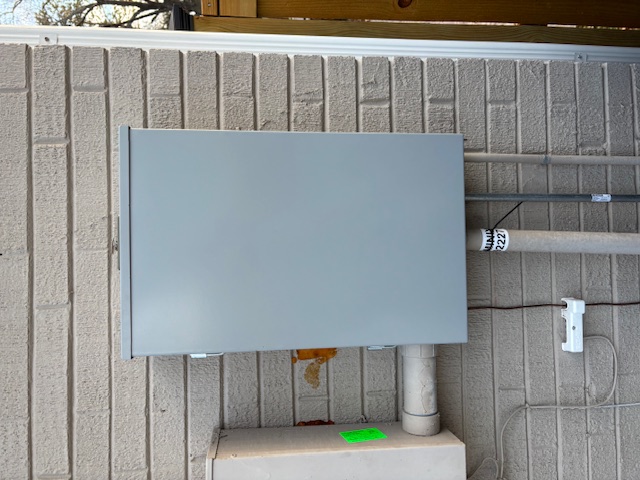
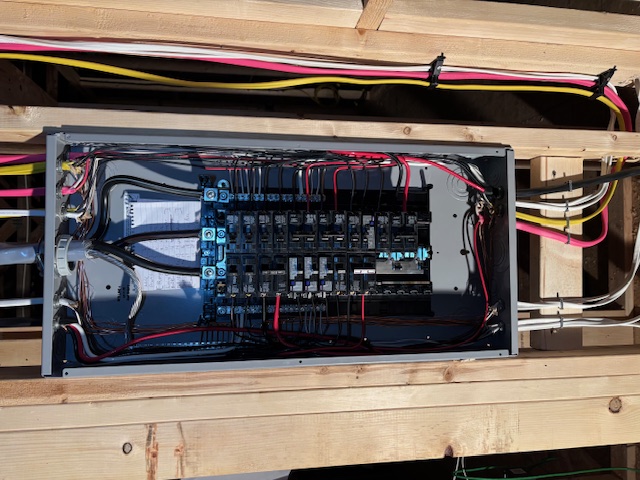
Cary covers more housing generations than anywhere else we work — 1970s and 80s neighborhoods through construction finishing this year. That spread is the whole story for panel work here. Unlike the newer towns south of us, a Cary panel inquiry has a real chance of being a genuine capacity problem rather than a space problem, and the older sections still hold equipment that gets replaced on sight. This page covers what we find across Cary, what a 100A to 200A upgrade actually involves, and what the cost is driven by.
Most towns we serve have a dominant housing era. Cary does not. The neighborhoods off Maynard and Chatham date to a different electrical reality than the construction along the 540 corridor, and the correct recommendation is genuinely different between them.
That means we do not walk into a Cary job with an assumption. What we find splits roughly along the age of the neighborhood:
This is the job Cary generates more than any other town we serve, so it is worth being specific about what it includes.
The service entrance cable has to be replaced. The existing conductors were sized for 100A and cannot carry 200A, so new cable runs from the meter base to the panel. That is the single largest condition-driven adder on this job at roughly $650 to $1,300.
The panel itself is replaced, the grounding electrode system is brought current — typically a supplemental rod and a water-line bond — and the branch circuits that require arc-fault protection get AFCI breakers.
One thing that surprises people: Duke Energy does not charge for the 100A to 200A change, and no utility-side work is typically required. The meter socket may need replacement depending on its condition, but the service drop or lateral usually does not change. Anyone telling you the utility bills you for the upgrade is mistaken.
We also do not relocate the meter cabinet unless there is a real reason. Relocation means running a new feed to the main panel and the cost climbs fast. If yours is serviceable where it sits, it stays there.
Panel work starts at $3,000. Above that, the number is driven by conditions, not by guesswork — and each of these is something you can ask any contractor to itemize before you sign:
Upgrading a panel means bringing it up to current code, and current code requires arc-fault circuit interrupter protection on the branch circuits that call for it. Enforcement detail sits with the authority having jurisdiction and we confirm the current interpretation at permit time, but the working rule holds: new panel, current code, AFCI where required.
A standard breaker is roughly $10 to $20 installed. An AFCI breaker is roughly $78 to $130. Most homes need five to ten, so the practical adder is around $300 to $1,100.
In a market with as many contractors as Cary has, this is the line item most likely to be missing from the cheapest quote. It is not the only reason bids differ, but it is worth confirming is included rather than finding out at inspection.
Pricing reflects conditions as of Q3 2026 and moves with equipment costs.
Panel and service work in Cary requires a permit and an inspection. The permit fee is $200 and appears as a line item on your estimate. Inspectors typically schedule residential electrical inspections within 1–3 business days of request, and approval comes quickly once they are on site.
We pull the permit, coordinate the Duke Energy disconnect and reconnect, and carry the inspection through to a pass. You do not call the town or the utility — that scheduling is ours, and we sequence it so the job is not sitting finished waiting on a signature.
Six to ten hours, eight typical. Normally a single day, with power back the same day. We do our best never to leave a house without power overnight, and if there is any chance of it we will tell you early enough to make arrangements.
Plan on being without power for most of a working day while Duke disconnects, we work, Duke reconnects, and the inspector signs off. If a home office, medical equipment, or a home business makes that difficult, say so at the estimate and we will plan around it.
Cary has no shortage of electrical contractors and we are not the cheapest of them. What you get instead is a load calculation done properly, a licensed professional electrical engineer performing the work, AFCI protection priced into the quote rather than added later, aluminum wiring identified before the job starts rather than during it, and the panel finished in a day.
If price is the only variable you are comparing, we are likely not the right fit — and it is better for both of us to know that at the first phone call. If you want a service sized for the heat pump and the EV charger you have not bought yet, that is the work we do.
Panel work starts at $3,000. The 100A to 200A change specifically adds roughly $650 to $1,300 for new service entrance cable, since the existing conductors were sized for 100A. On top of that, the AFCI breaker count adds roughly $300 to $1,100, the permit is $200, and the panel selection and grounding work vary. The number comes from a site visit and a load calculation, not from a photo.
No. Duke Energy does not charge for the 100A to 200A change and no utility-side work is typically required. The meter socket may need replacing depending on condition, but the service drop or lateral usually does not change. The cost of the upgrade is contractor-side: cable, panel, breakers, and labor.
Not automatically. Some panels get flagged on age alone when the equipment is still serviceable, and some genuinely need replacing on condition — corroded bus, overheated lugs, water intrusion, or modifications a previous owner made. We assess the actual equipment and run a load calculation before recommending anything. If replacement is not warranted, we will say so.
It depends on the load calculation, and in Cary it genuinely goes both ways. Homes from the 1990s onward usually have a 200A service with adequate capacity and simply no free breaker slots — a subpanel handles that for less. Where we have found 1970s and 80s homes still on original 100A or 150A service, the full upgrade is usually what is warranted — though it varies house to house. We run the calculation under NEC Article 220 before recommending scope, and if a subpanel solves it we will say so.
Most of a working day. The job runs six to ten hours with eight typical, and power is normally restored the same day. We do our best never to leave a house without power overnight, and if there is any chance of it we will discuss it well before the work starts so you can make arrangements. Tell us at the estimate if a home office, medical device, or home business makes the outage window a problem.
Inspections are typically scheduled within 1–3 business days of request, and approval comes quickly once the inspector is on site. We pull the permit, coordinate the Duke Energy disconnect and reconnect, and carry the inspection through to a pass.
It changes the scope of the panel job and it needs to be identified before anyone gives you a number. Aluminum branch circuit wiring shows up in a specific late-1960s to mid-1970s window, which is squarely within Cary's older housing stock. We check for it at the site visit so it is priced into the estimate rather than discovered mid-job.
This page covers panel upgrades specifically. For the full picture of residential and commercial electrical work we do in Cary — including neighborhoods served, recent customer reviews, and other services — visit our Cary service area page.
View all electrical services in Cary →Licensed electrician and licensed electrical engineer on every job. Written estimate before work starts.
Or email service@lightenupelectrical.com